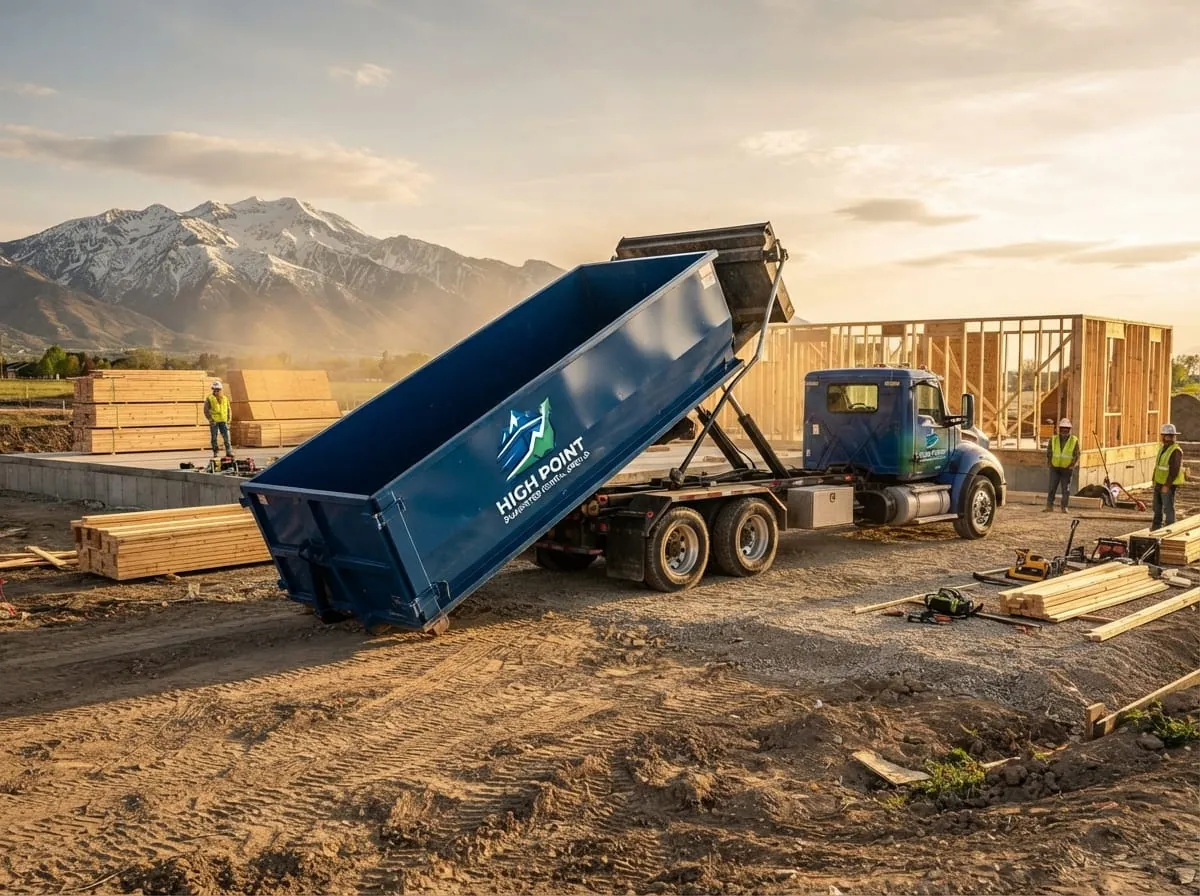
Here is something a lot of homeowners in High Point do not think about until it is too late: the dumpster you rent has to sit somewhere, and wherever it sits, it leaves a mark. A loaded 20-yard roll-off can weigh six to eight tons once your renovation debris, shingles, or concrete goes in. That weight rides on two narrow steel rails and, during delivery and pickup, on hard rubber wheels that pivot and drag across your surface. On the wrong day, on the wrong driveway, that is a recipe for cracked concrete, gouged asphalt, or deep ruts in your yard.
The good news is that driveway damage is almost always preventable. After years of placing containers on everything from established uptown concrete drives to brand-new subdivision slabs, long gravel country lanes, and soft red-clay ground out in rural Guilford County, we have learned exactly what protects a surface and what wrecks it. This guide walks you through all of it so your project leaves behind a clean driveway and nothing else.
Why Roll-Off Dumpsters Can Mark or Crack Your Driveway
A roll-off container is not a gentle piece of equipment. Understanding how it moves and where it concentrates weight makes every protection step that follows make sense.
Concentrated Weight on Small Contact Points
When a dumpster sits on your driveway, nearly all of its weight funnels through the two long steel runners on the underside of the box plus, on many models, a set of rear wheels and a front support foot. Those contact points are small relative to the tonnage pressing down on them. The result is point loading: thousands of pounds squeezed onto a few square inches. Concrete can handle a lot, but a hairline crack or an older, weaker section of slab can spider out under that kind of pressure.
Delivery and Pickup Are the Risky Moments
The container does the most damage while it is moving. During drop-off, the truck tilts the bed and the dumpster rolls off the back on its wheels before the rails settle. During pickup, a cable drags the loaded box up the tilted bed. In both moments the wheels and the lip of the frame scrape across your surface, and the full weight shifts suddenly from one point to another. Scratches, scuffs, and the occasional gouge almost always happen during these transitions, not while the box is sitting still.
Heat, Moisture, and Ground Conditions Multiply the Risk
The same container that sits harmlessly on a cool, dry concrete slab can sink into softened asphalt on a 95-degree July afternoon, or punch ruts into red clay that got soaked by an afternoon Piedmont thunderstorm. The surface matters as much as the weight. We will cover each surface type below.
The Simplest Fix: Boards and Plywood Under the Contact Points
If you remember one thing from this article, remember this: put wood down first. Laying boards or plywood between the dumpster and your driveway is the single most effective, cheapest form of protection there is, and it works on every surface.
- Thick plywood sheets (three-quarter inch or heavier) spread the weight of the steel rails across a much larger area, turning concentrated point loads into gentle distributed pressure.
- Two-by-ten or two-by-twelve boards placed under the rails and wheels create a sacrificial layer. If anything gets scratched or dented, it is the board, not your concrete.
- Old scaffold planks or pallet lumber work fine in a pinch. The wood does not need to be pretty, it just needs to be solid and sit flat.
Position the boards so they sit under each steel rail for the full length the container will rest on, and add extra pieces where the wheels and the front foot land. A good hauler brings this material and places it automatically, but it never hurts to have a few sheets of plywood ready as backup, especially if your driveway is older, decorative, or freshly sealed.
Weight Distribution: Spreading the Load
Protecting a driveway is really about turning a small, heavy footprint into a large, light one. Boards do most of that work, but how you load the dumpster matters too.
- Load evenly front to back. Piling all your heavy material, concrete, dirt, or shingles, at one end concentrates weight on one set of rails and increases the chance of cracking directly underneath.
- Keep heavy material low and spread out. A flat, even bed of debris puts gentler pressure on the ground than a tall, lopsided pile.
- Do not overload. Every container has a weight limit. Blowing past it is not just an overage-fee problem, it is a driveway problem, because more tonnage means more force on your surface. If you are unsure which size keeps your weight reasonable, our guide on what size dumpster you need walks through it, and for tight or weight-sensitive spots a 10-yard dumpster is often the smart, driveway-friendly choice.
Blazing Summer Heat and Softened Asphalt
High Point summers are hot and humid, and asphalt driveways pay the price. Asphalt is bound together with a petroleum-based binder that softens as temperatures climb. On a still, sunny afternoon the surface of a dark asphalt drive can reach 130 to 150 degrees even when the air is only in the 90s. At those temperatures the asphalt becomes pliable, almost clay-like, and anything heavy pressing into it, including dumpster rails and wheels, can leave permanent dents, ruts, or imprints.
How to protect asphalt in the heat:
- Always use plywood, never just boards, on asphalt in summer. Full sheets spread the load widest and keep the steel from sinking in.
- Schedule delivery and pickup for the morning when the surface is coolest and firmest, if your hauler can accommodate it.
- Keep the rental short. The longer a loaded box bakes in one spot, the more the softened asphalt can deform around it.
- Avoid freshly sealed or newly paved driveways entirely. New asphalt needs months to fully cure, and a dumpster will mark it badly. Place the container on the street or in the yard instead.
Concrete Driveways: Uptown Classics and New Subdivisions
Concrete is the most forgiving common surface, but it is not bulletproof, and High Point has two very different kinds of concrete drives.
Established Uptown and Older Neighborhood Drives
Older concrete around High Point's established neighborhoods has often been through decades of freeze-thaw cycles, root heave, and settling. You will see existing cracks, control joints, and sections that have lifted relative to their neighbors. Those weak points are exactly where a heavy dumpster is most likely to cause new cracking. Lay plywood across any visible cracks or joints so the load bridges them instead of pressing straight down into a weak seam. Decorative, stamped, or stained concrete also deserves full plywood coverage, because scratches on a decorative surface are expensive to fix.
New-Subdivision Drives
Newer concrete in High Point's growing subdivisions is generally strong, but it can be surprisingly fragile in its first year while it finishes curing, and the clean, light finish shows every scuff and rust stain. Boards prevent both the cracking risk and the cosmetic marks. One more note for new concrete: a steel container left sitting in the rain can leave rust stains that are a pain to remove, so wood underneath helps there too.
Gravel and Long Country Drives in Rural Guilford County
Plenty of homes around High Point and the wider Guilford County countryside sit on acreage with gravel drives, long lanes, or circular gravel parking areas. Gravel is actually a great surface for a dumpster in one sense, there is no finished slab to crack, but it brings its own challenges.
- Ruts and displacement. Heavy wheels push gravel aside and can dig ruts, especially where the drive is thin or the base underneath is soft. Plywood or thick boards under the wheels and rails spread the load and keep the stone from scattering.
- Soft spots and base failure. Long rural drives often have patches where the gravel base is thin or the ground beneath holds water. A loaded box parked on a soft spot can sink. Pick the firmest, most level stretch, usually closer to the road where the base has been compacted by regular traffic.
- Level matters. A container on sloped or uneven gravel can shift as it loads. A flat spot keeps it stable and keeps the doors working.
If your gravel lane is long or narrow, tell your hauler ahead of time. A good roll-off driver will scout the approach and choose a placement that protects both your drive and the truck. Our roll-off dumpster rental team handles these country placements all the time.
Soft Red Clay and Piedmont Storms
The Piedmont region's signature red clay is beautiful and terrible in equal measure. When it is dry it is firm enough to drive on. When it gets soaked by one of our sudden summer or fall storms, it turns slick, soft, and alarmingly deep. A dumpster placed on bare clay before a storm can sink axle-deep, leave ruts you will be looking at for a year, and sometimes trap the pickup truck too.
How to handle clay and wet ground:
- Keep the container off bare soil whenever possible. A paved or gravel surface is always the better choice. If you must place it on the ground, build a wide base of plywood sheets to float the weight across as much area as you can.
- Watch the forecast. If heavy rain is coming, schedule delivery for after the ground has had a chance to firm up, or make sure the box is on a hard surface before the storm hits.
- Give wet clay time to dry before pickup. Pulling a loaded box off saturated clay is what carves the deepest ruts. A day or two of drying can save your yard.
Backing, Loading, and Day-to-Day Care
Once the container is placed, a little care during the rental keeps everything damage-free.
- Do not drag the container. If placement needs to change, call the hauler. Trying to shove a loaded box with a truck or tractor is the fastest way to tear up a surface.
- Load through the door when you can. Walking debris in through the swing door is easier on your back than heaving everything over the high wall, and it keeps the weight distributed as you go.
- Keep the area around the box clear so the truck has a clean, straight approach for pickup. A tight, angled pickup is where scraping happens.
- Check the boards. If a plank shifts out from under a rail during loading, slide it back so the contact point stays protected.
What a Good Hauler Does Automatically
A big part of driveway protection is simply working with a company that takes it seriously. When you book with us, several things happen without you having to ask:
- We ask about your surface, concrete, asphalt, gravel, or dirt, before we deliver, so the driver arrives prepared.
- We bring and place boards or plywood under the contact points on finished surfaces.
- Our drivers scout the approach, choose a level spot, and set the box down gently rather than letting it drop.
- We factor in heat and weather, and we will happily talk through timing if your asphalt is baking or a storm is on the way.
- We match you to the right size so you are not overloading a container and over-stressing your driveway. If you are tearing off a roof, for example, our guide to choosing the right dumpster for a roofing tear-off helps you keep the weight sensible.
Protecting your property is part of the job, not an extra. You can see the full range of what we offer on our services page, and homeowners can start with our residential dumpster rental options.
Protect Your Driveway From Day One
A dumpster rental should make your project easier, not leave you with a cracked slab, dented asphalt, or a rutted clay yard. Lay wood under the contact points, load evenly, respect the heat and the rain, and work with a hauler who treats your driveway like their own. Do those things and the only thing left behind when the box rolls away will be a clean, empty surface, ready for whatever comes next.
Ready to book a driveway-friendly dumpster in High Point? Call High Point Dumpster Rental Group at (743) 229-5872 or reach out through our contact page and we will get you set up with the right container, placed the right way.

Owner, High Point Dumpster Rental Group — sharing straight advice from years of local hauling across High Point and Guilford County.
Frequently Asked Questions
Will a dumpster crack my concrete driveway?
It can, but it rarely does when handled right. A loaded roll-off concentrates several tons on two narrow steel rails, which can crack older or weaker concrete. Laying plywood or thick boards under the contact points spreads that weight out and protects the slab. Bridging any existing cracks or control joints with wood is especially important on older uptown drives.
Do I really need to put boards under a dumpster?
Yes, it is the single most effective protection there is. Boards and plywood turn the container's concentrated point loads into gentle, distributed pressure and create a sacrificial layer, so any scratch or dent lands on the wood instead of your driveway. A good hauler places this material automatically on finished surfaces, but keeping a few plywood sheets on hand is smart insurance.
Why is summer heat bad for asphalt driveways during a rental?
Asphalt is held together by a petroleum binder that softens as it heats up, and a dark drive can reach 130 to 150 degrees on a hot, humid High Point afternoon. At those temperatures the surface becomes pliable, so dumpster rails and wheels can leave permanent dents or ruts. Use full plywood sheets, schedule delivery for cooler mornings, and never place a box on freshly sealed or newly paved asphalt.
Can I put a dumpster on a gravel or dirt driveway?
Yes, and gravel has the advantage of no finished slab to crack, but heavy wheels can scatter stone and dig ruts, and soft spots can let the box sink. Choose a firm, level section, place plywood or thick boards under the wheels and rails, and avoid bare red clay before a storm since wet clay turns soft and ruts deeply. Tell your hauler about long or narrow country lanes ahead of time.
What does a good dumpster company do to protect my property?
A good hauler asks about your surface before delivery, brings and places boards or plywood under the contact points, scouts the approach for a level spot, sets the box down gently instead of dropping it, and factors in heat and weather on timing. They also match you to the right size so you are not overloading a container and over-stressing your driveway. Call us at (743) 229-5872 to set it up.